


News · July 29, 2024
Reproductive BioMedicine Online (RBMO) Partnership
Reproductive BioMedicine Online (RBMO) is delighted to welcome the World Endometriosis Society (WES) as a new Affiliated Society of the journal.
The World Endometriosis Society is a global organisation with a mission to advance evidence-based standards and innovations for education, advocacy, clinical care, and research in endometriosis, adenomyosis, and related disorders.
RBMO is proud to collaborate with WES, to provide an international platform for the research, innovative thought and activities of its members, in pursuit of a shared goal to further the management, classification, diagnosis, and ultimately the prevention of endometriosis.
RBMO Co-Chief Editor Prof. Juan García-Velasco says of the new partnership “We at RBMO are very enthusiastic about the potential to work together with WES and their members. The impact of endometriosis and adenomyosis on reproduction, general health, and wellbeing across women’s lives are still a matter of investigation, with best clinical approaches advancing and evolving. RBMO will provide a strong platform for these papers to be published and discussed among colleagues working with the same focus.”
WES President, Prof. Stacey Missmer comments “WES leadership and our members are excited to partner with RBMO to continue our mission of encouraging novel and impactful discoveries and disseminating their findings to raise knowledge, awareness, and attention for maximum benefit to all who are impacted by endometriosis or adenomyosis.”
RBMO Co-Chief Editor Prof. Nick Macklon says: “We very much look forward to establishing our relationship with WES and working together to highlight the Societies’ reproductive health initiatives and publications.”
Together with journal publisher Elsevier, Reproductive BioMedicine Online and the World Endometriosis Society look forward to expanding the opportunities to support Society members and authors in improving the quality of life of endometriosis patients.
Juan García-Velasco and Nick Macklon
RBMO Chief Editors
https://linktr.ee/rbmo
Stacey Missmer
WES President
https://endometriosis.ca
News · January 28, 2024
In Memoriam: Robert N. Taylor MD, PhD
The WES Senior and Early Career Boards and Members across the globe offer our condolences and celebrate the exceptional life of Robert N. Taylor. Professor and Dean, Dr. Taylor served WES as a Senior Board member from 2005-2017, holding the Executive Board office of Secretary from 2011-2017, after which he has continued to serve as a WES Senior Ambassador.
A revered clinician and scientist, he led much of the foundational discoveries in cytokine activity and angiogenic underpinnings of endometriosis. Most of us, however, will be forever in his debt for his intense focus on mentoring – marked by his warm welcoming, insightful criticism, thoughtful encouragement, and firm collaboration. Our thoughts are with his wife, Dr. Sarah Berga, and their family at this difficult time.
News · November 30, 2023
David Healy Award 2023 presented to Marcela Haro
The David Healy Award for best Scientific Abstract was presented to Marcela Haro at the closing ceremony of the 15th World Congress on Endometriosis for her work on how Heterogeneous Immune Responses Underlie Subtype-Specific and Patient-Specific Heterogeneity in Endometriosis.
Haro M1,2, Fonseca M1,2, Abbasi F1,2, Goodridge H3,4, Siedhoff M5, Jefferies C6, Truong M5, Wright K5, Anglesio M 7,8, Medeiros F9, Lawrenson K1,2,10,11, Yu P10,2
1Women’s Cancer Research Program at the Samuel Oschin Comprehensive Cancer Center, Cedars-Sinai Medical Center, Los Angeles, United States of America, 2Division of Gynecologic Oncology, Department of Obstetrics and Gynecology, Cedars-Sinai Medical Center , Los Angeles, United States of America, 3Board of Governors Regenerative Medicine Institute, Cedars-Sinai Medical Center, Los Angeles, United States of America, 4Department of Biomedical Sciences, Cedars-Sinai Medical Center, Los Angeles, United States of America, 5Division of Minimally Invasive Gynecologic Surgery, Department of Obstetrics and Gynecology, Cedars-Sinai Medical Center, Los Angeles, United States of America, 6 Department of Medicine, Division of Rheumatology, Cedars-Sinai Medical Center, Los Angeles, United States of America, 7 Department of Obstetrics and Gynecology, University of British Columbia, Vancouver, Canada, 8British Columbia’s Gynecological Cancer Research (OVCARE) Program, University of British Columbia, Vancouver General Hospital, and BC Cancer, Vancouver, Canada, 9Department of Pathology and Laboratory Medicine, Cedars-Sinai Medical Center, Los Angeles, United States of America, 10Cancer Prevention and Control Program, Samuel Oschin Comprehensive Cancer Center, Cedars-Sinai Medical Center, Los Angeles, United States of America, 11Center for Bioinformatics and Functional
Genomics, Cedars-Sinai Medical Center, Los Angeles, United States of America
Introduction:
Endometriosis is characterized by endometrial-type glands and stroma growing outside of the uterine cavity, evading the typical cell-intrinsic and cell-extrinsic safeguards (including immune surveillance) that should prevent cells from surviving at ectopic locations. Chronic inflammation and dysregulation in the immune response contribute to the pathogenesis of endometriosis, however, little is understood regarding how immune dysregulation contributes to the extensive heterogeneity that characterizes endometriosis.
Aim:
This research seeks to phenotype the immune repertoire in endometriosis and explore the dysregulation in the molecular signals in the tissue microenvironment that influences immune cell recruitment and function.
Materials and Methods:
Single cell RNA sequencing was applied to >370,000 cells from endometriosis, eutopic endometrium, unaffected ovary and endometriosis-free peritoneum. All specimens were subjected to pathology review and genotyping for somatic variants in commonly mutated genes.
Results:
Endometriosis patients could be stratified into ‘immune-hot’ or ‘immune-cold’ subgroups based on the presence of lymphoid aggregates and germinal centers proximal to lesions. B-cells and plasma cells were particularly enriched in endometriosis. Elevated autoreactive antibodies, B-cell survival and recruitments signals and an interferon signature are seen in endometriosis.
Conclusion and impact:
Extensive heterogeneity in immune responses to endometriosis may explain, at least in part, the heterogenous presentations and symptoms associated with disease. Ongoing experiments are exploring the therapeutic potential of the anti-CD20 monoclonal antibody for patients with elevated B-cell dysfunction. This research is providing clinically relevant insights into the role of B-cells in the pathogenesis of endometriosis and potential targets for both diagnosis and therapeutics.
News ·
Rodolphe Maheux Award 2023 presented to Scott MacKenzie
The 2023 Rodolphe Maheux Award for best Clinical Abstract was presented to Scott MacKenzie at the closing ceremony of the 15th World Congress on Endometriosis for his work on how Genome-wide association reveals a locus in Neuregulin 3 associated with gabapentin efficacy in women with chronic pelvic pain.
MacKenzie S1, Rahmioglu N2,3, Collins F1, Coxon L3, Vincent K3, Zondervan K2,3, Horne A1, Whitaker L1
1MRC Centre for Reproductive Health, University of Edinburgh, Edinburgh, United Kingdom, 2Wellcome Centre for Human Genetics, University of Oxford, Oxford, United Kingdom, 3Nuffield Department of Women’s & Reproductive Health, University of Oxford, Oxford, United Kingdom
Introduction:
Chronic pelvic pain (CPP) in women with no obvious pelvic pathology has few evidence-based treatment options. Our recent multicentre randomised controlled trial (GaPP2) in women with CPP showed that gabapentin did not relieve pain and was associated with higher rates of side-effects than placebo. However, the data suggest that subgroups of women could benefit from gabapentin.
Aim:
To identify if common genetic variants are associated with gabapentin response in women with CPP with no obvious pelvic pathology.
Materials and Methods:
We conducted a genome-wide association study of gabapentin response, using participants from GaPP2. Two phenotypes were investigated: gabapentin analgesic response (≥30% reduction in worst and/or average pain), and side-effect burden (≥3 side-effects reported). Standard genetic quality control was conducted followed by imputation to HRC reference panel. Frequentist association analysis was conducted in SNPTEST including autosomes and chromosome X.
Results:
93 participants provided salivary samples for genotyping (82 passed quality control) and 5,522,729 SNPs were tested for association (n=29 ≥30% vs. n=42 <30% reduction in worst and/or average pain scores). One genome-wide significant association with gabapentin analgesic response was identified, rs4442490, an intron variant located in Neuregulin 3 (NRG3) at 10q23.1 (p=2.11×10⁻⁸; OR=18.82 (95%CI 4.86–72.83);
MAF=0.42). NRG3 is expressed predominantly in brain tissues and involved in nervous system maintenance/repair. No SNPs reached genome-wide significance for gabapentin side-effect burden.
Conclusion and impact:
A locus in NRG3 is associated with gabapentin efficacy in women with CPP with no obvious pelvic pathology, highlighting the possibility of a precision medicine approach to symptom management.
News · May 30, 2023
15th World Congress on Endometriosis, 2023
Registration during the opening day of the congress; the excitement was palpable. Over 1100 delegates from over 50 countries attended this brilliant congress, all with a common goal of improving endometriosis care for those living with the condition.

Dr Mathew Leonardi, Assistant Professor in Obstetrics & Gynaecology from McMaster University chaired the incredibly well attended pre-congress meeting in diagnosing and staging endometriosis with ultrasound. His clear message of “Diagnosis is therapy” was present throughout the full conference.

Below, the amazing Alison Deslandes, Specialist Obstetrics and Gynaecological sonographer from the University of Adelaide, scanning our volunteer patient. A live, in-real time ultrasound scan demonstrating the importance of diagnosis of endometriosis to allow those living with the condition feel more empowered about their care.

The art exhibition offered a very thought-provoking visual representation of endometriosis, the condition affecting 1 in 10 women and those assigned female at birth (of reproductive age).

EXPPECT PhD student Katherine Edgley presenting her 2 posters at the congress. One on high adherence to using smartwatches in combination with daily self-reports in patients with endometriosis.
The other, on managing pain and fatigue in endometriosis by exploring the role of physical activity, sleep and diurnal rhythms through smartwatch data.

World Congress on Endometriosis provided a fantastic networking opportunity for the clinicians of the future. Below we see 5th year University of Edinburgh medical student Kevin Kuan who has an interest in endometriosis care and was able to have the opportunity to present 2 posters, outlining his research into improving outcomes for those living with endometriosis.

World congress was a mammoth team effort including volunteers from all backgrounds who wanted to help at such a pivotal event for those suffering from endometriosis and clinicians wishing to improve endometriosis-related care. Below we have Ann Doust, Research Portfolio Manager to Professor Andrew Horne; the excitement did not dwindle as the week progressed.

Professors Philippa Saunders, Andrew Horne and Luk Rombauts giving a true Scottish welcome to delegates attending the conference.

A group of dedicated endometriosis specialists took on the huge challenge of cycling from Endometriosis UKs headquarters in London all the way to Edinburgh to attend the World Congress on Endometriosis, raising an incredible £10,835 in the process.

Professor John Cryan from University College Cork gave an amazing keynote on the gut brain axis. “An evidence base for the role of the gut microbiome in endometriosis is poised to change the way we understand & treat it. Unlike the genome, the microbiome is modifiable”.

The audience was captivated during one of the many talks given in the main auditorium.

Specialist Research Nurse Priscilla Fernandez from University of Edinburgh presented on the important topic of the Nurse Specialist role in research highlighting the importance of multidisciplinary team working and how it benefits patients seeking new treatment options.

Dr Lucy Whitaker Clinical Lecturer in Obstetrics & Gynaecology from University of Edinburgh presented on an exploratory open label study (EPiC1) of Dichloroacetate (DCA) to treat endometriosis associated pain. EPiC2 to start recruitment during the autumn of 2023.

The main auditorium, full of delegates from different disciplines, with one common objective of helping those with endometriosis.

Stacey Missmer, Professor in the Department of Obstetrics, Gynaecology and Reproductive Biology from Michigan State University during the closing ceremony, thanking Early Career World Endometriosis Society Board.

Professors, Andrew Horne, Luk Rombauts and Philippa Saunders ready to take to the dancefloor during the World Congress celebration dinner at the National Museum of Scotland

Great food, drink and company at the celebration dinner. Relationships were forged and memories made at this fantastic event.

Aerialists delighted delegates with their spectacular vertigo inducing routine.

And 5,6,7,8. The “Virginia Reel” ceilidh dance well under way. Ceilidh time at the museum.

Our very own Dr Scott Mackenzie, winner of the Rodolphe Maheux award for best abstract from an Early Career Clinician identifying a SNP associated with gabapentin response in chronic pelvic pain. He was accompanied onstage by Emma Cox from Endometriosis UK, Professor Rombauts, Dr Jacques Donnez and Professors Saunders and Horne.

Professor Lorimer Mosely from University of South Australia closed the successful congress with a fascinating keynote focusing on chronic pain, reminiscent of a TED Talk.

WCE2023 Award Winners
Endometriosis UK Prize – Best Abstract Incorporating Public/Patient Engagement
Kate Wahl, University of British Columbia
ENDOCATION: A cluster randomized controlled trial of a menstrual health and endometriosis education program for middle and secondary school students
Oral Presentations
Best oral presentation from an Early Career Clinician
Winner: Dr Connie Rees, Catharina Hospital Eindhoven
Highly Commended:
Dr Frances Bailey, Guy’s and St Thomas’ NHS Foundation Trust
Dr Tatjana Gibbons, University of Oxford
Best oral presentation from an Early Career Scientist
Winner: Anna Melgaard, Aarhus University
Highly Commended:
Dr Harriet Fitzgerald, Hudson Institute of Medical Research
Dr Fiona Cousins, Hudson Institute of Medical Research
Poster Presentations
Best poster presentation from an Early Career Clinician
Winner: Mohammed Elsherbini, University of Tokyo
Highly Commended:
Giorgia Elisabeth Columbo, University of Aberdeen
Melissa Herbst-Kralovetz, University of Arizona
Best poster presentation from an Early Career Scientist:
Winner: Ellen Kan, MIT
Highly Commended:
Lydia Coxon, University of Oxford
Axelle Brulport, INSERM
Anna Senior, University of Warwick
News · May 16, 2023
Reframing Endometriosis: Power, Politics and Potential Futures
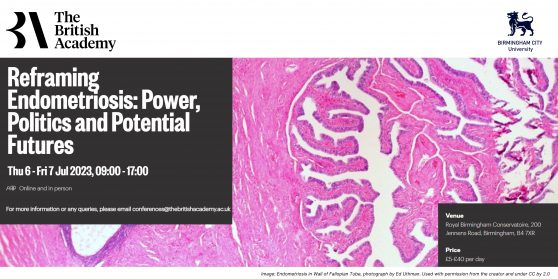
British Academy/Wellcome Trust Conferences bring together scholars and specialists from around the world to explore themes related to health and wellbeing.
Endometriosis is a common yet poorly understood condition. Media and academic discourse often highlight failures in diagnosis as emblematic of gender biases in health. This conference focuses on practices of exclusion in past and present approaches to endometriosis as well as potential inclusive futures.
It is the first academic conference to bring together UK and internationally based endometriosis social science and humanities researchers alongside, and in conversation with, prominent (bio)medical researchers, third sector representatives and independent researchers and authors.
The way endometriosis is categorised is central to how it is understood and experienced. Speakers will discuss the historical legacies of endometriosis as a ‘wandering womb’ induced ‘hysteria’ and ‘career women’s disease’. They will consider intersecting systems of power and the marginalisation of gendered, racialised, and disabled bodies. And they will explore the socio-cultural-political implications of the latest medical research suggesting endometriosis is a systemic (whole body), rather than a solely gynaecological, disease.
For Registration and more information, see the conference website: Reframing Endometriosis: Power, Politics and Potential Futures | The British Academy
Reframing Endometriosis: Power, Politics and Futures Programme available here
- Page 2 of 2
- 1
- 2