News · November 25, 2025

Global Search underway for the Chair of the Ainsworth Endometriosis Research Institute, Sydney, Australia

At the World Congress of Endometriosis in Sydney in May this year, the announcement of the $50 million Ainsworth Endometriosis Research Institute (AERI) was made and is now a reality.  AERI is a basic research Institute, centred at UNSW Sydney, with partner organisations at other Australian Universities.  The Institute will undertake scientific research that leads to translational changes for all people with endometriosis.   This will include programs such as pre-clinical models for endometriosis, drug repurposing and a ‘blue-sky’ program to progress the challenges that endometriosis presents.

AERI’s ‘5 C’ philosophy of Collaboration, Clinical Care, Community, Coordination and Capacity building drive AERI to ensure a program of research that is progressive, directed and adaptive.  The 10-year philanthropic gift that underpins AERI provides the surety for researchers willing to take on challenges for now, and challenges for the future.

We are undertaking a global search for AERI, who will play a key leadership role by leading an internationally recognised, innovative and impactful program of translational research focused on endometriosis. The AERI mission of ‘cause and cure’ has been determined by people with endometriosis as the most meaningful outcomes that will change their lives. Changing our fundamental understanding of endometriosis and how it impacts individuals, their families and society can and will be achieved.

This is a fulltime (35 hours a week) role based at UNSW, Sydney Australia for a level D-E academic (Associate Professor/Professor) who has the technical skills, passion and vision to lead AERI.  The chair appointment will be 5 years initially, plus a continuing substantive Professorial appointment and has an attractive salary package.

Further information:

Please see LinkedIn  or Jobs UNSW for detailed description and job application.

Enquiries:

Prof Jason Abbott, Interim Director AERI for more information

E: j.abbott@unsw.edu.au

Merita O’Connell, Talent Acquisition Consultant,  UNSW, Sydney

E:  merita.oconnell@unsw.edu.au


Back

News · October 29, 2025

Upcoming WESinars

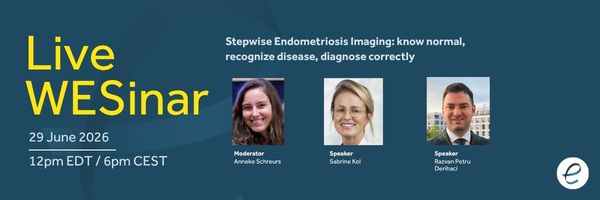
WESinar: Neurogynaecology: Endometriosis of the pelvic nerves and its management – 21 January 2026 – 12:00pm EST/ 6:00pm CET

Neurogynaecology: Endometriosis of the pelvic nerves and its management
Date:
21 January 2026
Time: 12:00pm EST/ 6:00pm CET
Moderators: Professor Ahmed El Minawi, Professor Mohamed Mabrouk
Speakers: Professor Gábor Szabó, Professor Marcello Ceccaroni, Professor Sylvia Mechsner, Dr Joseph Njagi

Click here to register for the WESinar


Back

Back

News · May 29, 2025

David Healy Award 2025 presented to Lindsay Guare

The David Healy Award for best Oral Presentation by an Early Career Scientist was presented to Lindsay Guare at the closing ceremony of the 16th World Congress on Endometriosis for her work on Expanding the Genetic Landscape of Endometriosis: Integrating Multi-omics with a Genome-wide Meta-analysis of Over 900,000 Genetically Diverse Women

L Guare1, J Das1, A Rajagopalan1, L Caruth1, S Namba2, Y Okada2, Y Shirai3, Y Yamamoto3, A Akerele4, J Jaworski4, D Velez-Edwards4, A Hill5, J Shortt5, N Elhadad6, G Jarvik7, L Kottyan8, Y Luo9, W Wei10, C Weng6, S Chapman11, Y Shi11, W Zhou11, A Mulford12, A Sanders12, B Brumpton13, E Moreno13, T Chen15, V Rovite14, Y Lin15,S Setia- Verma1

1University Of Pennsylvania, Philadelphia, United States
2The University of Tokyo, Japan
3Osaka University, Suita, Japan
4Vanderbilt University Medical Center, Nashville, United States
5Colorado Center for Precision Medicine, Aurora, United States
6Columbia University, New York City, United States
7University of Washington, Seattle, United States
8Cincinnati Children’s Hospital Medical Center, Cincinnati, United States
9Northwestern University, Evanston, United States
10Vanderbilt University, Nashville, United States
11The Broad Institute, Cambridge, United States
12Endeavor Health, Evanston, United States
13Norwegian University of Science and Technology, Trondheim, Norway
14Latvian Biomedical Research and Study Centre, Latvia
15National Health Research Institutes, Maoli County, Taiwan

Country: United States of America Introduction/Background

Endometriosis is a complex heritable disorder requiring comprehensive genomic investigation

across diverse populations. Previous studies have been somewhat limited by European-centric data. The Global Biobank Meta-Analysis Initiative (GBMI) enables large-scale genomic analysis across multiple genetic ancestry groups, complemented by computational multi-omic and single cell analyses to understand disease mechanisms.

Materials and Methods

We performed a Genome-Wide Association Study (GWAS) meta-analysis across 14 biobanks worldwide, with 31% non-European samples. Multiple endometriosis phenotype definitions were analyzed, including broad and surgically-confirmed cases. Post-GWAS analyses included ancestry-stratified heritability estimation and fine-mapping. We conducted Transcriptome- wide and Proteome-wide association analyses, followed by single-cell analyses of implicated genes. Integration of multi-omic data through Mergeomics analysis enabled comprehensive pathway enrichment assessment.

Results

The GWAS (N=928,413 : 44,125 cases) identified 45 significant loci using a broad phenotype definition, including seven previously-unreported signals and the first genome-wide significant locus (POLR2M) in African ancestry. Narrow phenotypes and surgically confirmed cases replicated known loci near CDC42 and SYNE1. Observed heritability was consistent (10-12%) across ancestral groups. Cross-ancestry fine-mapping revealed putative causal variants in 38 loci. Multi-omic imputed association analyses identified 11 significantly-associated gene transcripts (two previously unknown: DTD1 and CCDC88B), two intronic splicing events (within PGR and NSRP1), and one protein, RSPO3. In silico single-cell analyses prioritized 18 disease-relevant cell types including venous cells and macrophages. The results of these analyses specified key players in enriched molecular pathways involving immunopathogenesis, angiogenesis, Wnt signaling, and balance between proliferation, differentiation, and migration of endometrial cells as major hallmarks in genomics of endometriosis.

Conclusion

This diverse GWAS combined with transcriptomic, splice-omic, proteomic, and single-cell analyses revealed novel genetic associations and molecular mechanisms in endometriosis. The identification of ancestry-specific variants and pathway interactions provides multiple targets for developing precise therapeutic interventions across diverse populations.

Key words: Genome wide association analyses, multi-omic data integration, diverse populations

Back

News ·

Rodolphe Maheux Award 2025 presented to Amelia Mardon

The 2025 Rodolphe Maheux Award for best Oral Presentation by an Early Career Clinician was awarded to Amelia Mardon at the closing ceremony of the 16th World Congress on Endometriosis for her presentation on Pain Science Education Concepts for Pelvic Pain: An e-Delphi of Expert Clinicians

A Mardon1,2, H Leake1, M Wilson2,3, E Karran2, R Parker4, R Malani5, L Moseley2, J Chalmers2

1NICM Health Research Institute, Western Sydney University, Westmead, Australia
2IIMPACT in Health, UniSA, Adelaide, Australia
3Persistent Pain Research Group, UniSA, Adelaide, Australia
4Department of Anaesthesia and Perioperative Medicine, University of Cape Town, Cape Town, South Africa
5MGM School of Physiotherapy, Aurangabad, A constituent unit of MGMIHS, Maharashtra, India

Country: Australia

Introduction/Background

Pain science education (PSE) involves learning about the biology of pain. However, PSE is yet to be thoroughly investigated for persistent pelvic pain potentially due to the lack of targeted curricula. This study gained consensus on PSE learning concepts important for persistent pelvic pain according to expert clinicians.

Materials and Methods

A three-round e-Delphi survey was conducted to generate and gain consensus on important PSE learning concepts for female persistent pelvic pain among 20 international, multidisciplinary expert clinicians. Learning concepts generated by clinicians were rated by importance using a six-point Likert scale. Concepts were considered important if they had a median rating important >3.0. Consensus on importance rating was considered reached for items with an interquartile range <1.0.

Results

The panel included expert clinicians from seven countries and six healthcare professions. Most clinicians (40%) had 20+ years of experience in pelvic pain. Overall, the expert clinicians generated 125 PSE learning concepts that were considered important for persistent pelvic pain; 92 (73.6%) learning concepts reached consensus on their importance rating. Of the 125 learning concepts, 102 were generated for persistent pelvic pain in general, and were categorised into 13 overarching PSE concepts (e.g., persistent pelvic pain involves changes to the brain and nervous system; many factors influence persistent pelvic pain). Sixteen concepts were generated for specific pelvic pain conditions (e.g., endometriosis) and seven concepts for specific life stages (e.g., adolescence).

Conclusion

This study provides the first list of key PSE concepts for persistent pelvic pain developed by expert clinicians. These concepts share similarities to those valued by consumers.1 Taken together, they provide a framework for developing and implementing PSE curricula for persistent pelvic pain in research and clinical settings.

Key words

Pain science education, pelvic pain, patient education

References

  1. Mardon AK, Chalmers KJ, Heathcote LC, Curtis LA, Freedman L, Malani R, Parker R, Neumann PB, Moseley GL, Leake HB. “I wish I knew then what I know now”—pain science education concepts important for female persistent pelvic pain: a reflexive thematic analysis. Pain. 2024 Sep 1;165(9):1990-2001.

Back

News · April 29, 2025

Call for new Early Career Ambassadors

Early-Career Ambassadors of the World Endometriosis Society (WES) are committed to WES’s vision and mission to advance evidence-based standards and innovations for education, advocacy, clinical care, and research in endometriosis and related disorders, in collaboration with its stakeholders and global partners to improve the lives of all affected by endometriosis or adenomyosis and their families.

Early-Career WES Ambassadors are encouraged to present innovative ideas to the Early Career WES Board that they consider will further the WES mission, with particular attention to engaging and supporting early career clinicians, scientists, and advocates developing a focus on endometriosis/adenomyosis care, discovery, and awareness.

Early-Career WES Ambassadors will be appointed for a two-year term. To be appointed, they must be paid-up members of WES and meet Early-Career status:

Clinicians and allied health professionals

(including physiotherapist, dieticians, pharmacists and psychologist)

  • Within six years of independent practice (full time equivalent)

Scientists (including social scientists)

  • Within ten years of their PhD award (this is from the time of the PhD ‘viva’ oral test), or equivalent professional training (full time equivalent)

Early-Career WES Ambassadors agree to represent WES and participate in at least one of the following WES initiatives:

  • Act as a referee for abstracts submitted to the World Congress on Endometriosis.
  • Actively participate as a contributing member to at least one WES taskforce/sub-committee.
  • Promote WES events and initiatives through societies and institutions in which they are involved, as well as sharing on social media.
  • Support the Early Career WES Board, when requested, in developing and executing initiatives that, following Senior Board approval, are targeting early career clinicians, scientists, or advocates to advance endometriosis/adenomyosis care, discovery, and advocacy.
  • Upon request from the Early Career WES Board, contribute to endometriosis- or adenomyosis-related initiatives in collaboration with outside stake-holding organisations.
  • Contribute in their locality and to regional endometriosis- or adenomyosis-societies, to support early career endometriosis- or adenomyosis-focused clinicians, scientists, policy makers, and patient advocates.
  • Champion WES mission and collaborative opportunities in interaction with colleagues, mentors, mentees, funders, and other stakeholders.

Following their two-year term as an Early-Career WES Ambassador, contributions to WES during this term will be reviewed by the WES Board, and re-appointment as an Early-Career WES Ambassador or appointment as a Senior Ambassador will be considered. In addition, they will be eligible for selection for the Early-Career WES board.

Early-Career WES Ambassadors are requested to provide the WES Secretariat with three “key words” describing their special interest areas within endometriosis and adenomyosis (for the purpose of appropriate inclusion in WES activities as outlined above).

Bios of Early-Career WES Ambassadors will be included on the WES website.

If you wish to be considered, please download and complete an Early Career Application Form 2025 and an Early Career Ambassador Referee Form 2025 from two referees (one to be a WES member) by 27 June 2025.

Please upload completed applications and referee forms via the online portal.


Back

News · July 29, 2024

Reproductive BioMedicine Online (RBMO) Partnership

Reproductive BioMedicine Online (RBMO) is delighted to welcome the World Endometriosis Society (WES) as a new Affiliated Society of the journal.

The World Endometriosis Society is a global organisation with a mission to advance evidence-based standards and innovations for education, advocacy, clinical care, and research in endometriosis, adenomyosis, and related disorders.

RBMO is proud to collaborate with WES, to provide an international platform for the research, innovative thought and activities of its members, in pursuit of a shared goal to further the management, classification, diagnosis, and ultimately the prevention of endometriosis.

RBMO Co-Chief Editor Prof. Juan García-Velasco says of the new partnership “We at RBMO are very enthusiastic about the potential to work together with WES and their members. The impact of endometriosis and adenomyosis on reproduction, general health, and wellbeing across women’s lives are still a matter of investigation, with best clinical approaches advancing and evolving. RBMO will provide a strong platform for these papers to be published and discussed among colleagues working with the same focus.”

WES President, Prof. Stacey Missmer comments “WES leadership and our members are excited to partner with RBMO to continue our mission of encouraging novel and impactful discoveries and disseminating their findings to raise knowledge, awareness, and attention for maximum benefit to all who are impacted by endometriosis or adenomyosis.”

RBMO Co-Chief Editor Prof. Nick Macklon says: “We very much look forward to establishing our relationship with WES and working together to highlight the Societies’ reproductive health initiatives and publications.”

Together with journal publisher Elsevier, Reproductive BioMedicine Online and the World Endometriosis Society look forward to expanding the opportunities to support Society members and authors in improving the quality of life of endometriosis patients.

Juan García-Velasco and Nick Macklon
RBMO Chief Editors
https://linktr.ee/rbmo

Stacey Missmer
WES President
https://endometriosis.ca 


Back